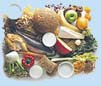
A look at details of various fats and oils available for our use. The first important factor to bear in mind is that any fat or oil is FAT and gives us 9 cals per gram or 45 cals for 1 teaspoon (5gms). There are many oils in the market whose label reads no cholesterol and many people mistake this for no calorie. All oils or fats have loads of calories and are dangerous to use liberally. My most important advice is to reduce total fat consumption. Working women must spend time and effort to train cooks and maids to use less oil. Try to use non-stick cookware and order or eat from restaurants not more than once or twice a week.
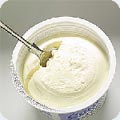 Fats are first to be classified as animal fat and vegetable fat. All animal fat contains cholesterol. Ghee, butter, cream of milk are high cholesterol fats consumed by both vegetarians as well as non-vegetarians and is one of the most subtly dangerous forms of fat for health. Animal fats are found in animal products like cheese, paneer, ice cream, egg, seafood, fish, poultry, red meats and organ meats. All these foods must be very limitedly consumed to protect your heart. Milk is a very important food and must be consumed daily by all from birth to death (500-700ml/day) but the cream must be thoroughly removed or skimmed as it is very dangerous. Fats are first to be classified as animal fat and vegetable fat. All animal fat contains cholesterol. Ghee, butter, cream of milk are high cholesterol fats consumed by both vegetarians as well as non-vegetarians and is one of the most subtly dangerous forms of fat for health. Animal fats are found in animal products like cheese, paneer, ice cream, egg, seafood, fish, poultry, red meats and organ meats. All these foods must be very limitedly consumed to protect your heart. Milk is a very important food and must be consumed daily by all from birth to death (500-700ml/day) but the cream must be thoroughly removed or skimmed as it is very dangerous.
All vegetable oils are free of cholesterol, sunflower, groundnut, coconut, olive oil etc. But they are differentiated on the basis of whether they are saturated or unsaturated. What is saturated fat? Any fat that solidifies at room temperature can be a saturated fat. Fats undergoing a process called hydrogenation to make them more stable, i.e have a longer shelf life is called saturation. These may not contain cholesterol but when they enter the body and blood they have a greater tendency to be converted to cholesterol. Therefore please be very, very cautious of the use of butter substitutes, which say no cholesterol but are saturated fats. Also restrict the consumption of biscuits, cookies and bakery items which are made with margarine, dalda etc. Coconut and palm oil are dangerous as they are also saturated fat. Finally we come to our oils, which are unsaturated. Yes, they are safe for use but if we consume large quantities of these as deep fried foods, pickles etc and use lots of oil for day to day seasoning this too can raise cholesterol and triglyceride levels in the blood besides lead to obesity and heart disease. E.g. A person desperately trying to lower his cholesterol levels said, " I have totally given up non veg but I eat fried papad and pickle with my lunch and dinner daily. My cholesterol levels have not come down even though I have not touched non veg for the past month". His total fat consumption is still too high. Oils are further
classified as mono unsaturated and polyunsaturated. Poly unsaturated fats are protective to the heart and help in keeping the cholesterol levels from raising. Some years ago because of this fact many people started using oils rich in polyunsaturated fats like safflower and sunflower oil. Today it is seen that mono unsaturated oils are also required to keep a balance with the polyunsaturated fat by protecting against free radical changes that occur in polyunsaturated fats. So the ideal is to use oils containing good amounts of both poly and mono unsaturated fatty acids.
Ghee
It is mainly a saturated fat and high in its cholesterol levels. I would say avoid completely in cooking as it may be consumed occasionally when eating mittai. A form of it will also come in the cream of milk consumed daily so adding it to food on a daily basis may raise blood cholesterol and weight. I have seen many vegetarians who consume ghee and mittai on a daily basis having serious heart problems.
Olive oil
It is an unsaturated fat. Of all unsaturated oils it is the highest in its mono unsaturated fatty acid content and very low in its polyunsaturated and saturated fatty acid content. If 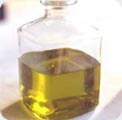 you are using safflower or sunflower oil mainly, then combining that with olive oil is helpful as you will then get a balance of mono and polyunsaturated fatty acids which is the ideal we are trying to achieve. you are using safflower or sunflower oil mainly, then combining that with olive oil is helpful as you will then get a balance of mono and polyunsaturated fatty acids which is the ideal we are trying to achieve. It is good for consumption in combination with another polyunsaturated fat but not advisable to be completely used on its own as a cooking oil. I mean don't do all your daily cooking only in olive oil. The body requires polyunsaturated fat as well which olive oil has very little of. Olive oil is an expensive oil and Indians may no like the taste of it in our traditional food. Sunflower oil
It is unsaturated oil with very low saturated fatty acid content and low mono unsaturated fatty acid content. It has a very high polyunsaturated fatty acid content and this is said to be protective against heart disease. It is one of the most popularly used oils and good for use except that it should not be the only oil used. They have recently studied that if only polyunsaturated fat is consumed over a long period of time it can propagate cancer. Therefore it should be used in combination with an oil rich in monounsaturated fat e.g. olive oil, til oil, mustard oil or ground nut oil. Ground nut oil
It is an unsaturated oil with an equal proportion of mono and poly unsaturated fatty acids and therefore a very good source of mono unsaturated fatty acid. However as we require a good amount of polyunsaturated fats I would suggest that it be used in combination with safflower or sunflower oil. It is reasonable in price and most Indians are used to its taste. It is a good option. Rice bran oil
It is unsaturated oil mainly composed of mono and poly unsaturated fatty acids present in almost equal proportions similar to groundnut oil. It also contains oryzanol and tocoferols, which are said to be protective to the heart by helping to reduce cholesterol levels. It is new in our markets but quite popularly used by Americans and Far Eastern countries. It has a pleasant nut like flavour a stable composition and does not smoke easily when used for frying so is used a lot for deep fat frying. It could be used in our kitchens in combination with sunflower or safflower oil. However people may have to acquire the taste.
| Fat Classification | | | (Animal fat - High in cholesterol (except fish oil) | | | |
| SATURATED |
UNSATURATED |
Cream of Milk |
Fish oil |
| Butter, ghee | | | Egg yolk |
| | Sea food | | | Red meats | | | Organ meats | |
|
| Vegetable fat - NO cholesterol | | | |
| SATURATED |
UNSATURATED | Coconut
Oil | MonoUnsaturated | Poly Unsaturated | | Palm Oil | Olive
Oil | Safflower Oil |
| Margarine |
Mustard Oil |
Sunflower Oil |
| Vanaspati |
Til Oil |
Corn Oil |
| Dalda |
| Soya bean Oils |
|
| Groundnut and Rice bran - equal amounts of mono & poly unsaturated | |