|
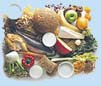
All diabetics know that they must avoid sugar, jaggery, sweets, cakes, pastries, jams, jelly, honey, soft drinks and juices, but they seem ignorant of the fact that oily, fatty and fried food can also raise the sugar levels dangerously.
Please note 1 gm (sugar) carbohydrate gives us 4 cals. While 1 gm (oil) fat gives us 9  cals. All foods whether sugar or oil are finally broken down to glucose and sent into the blood stream. A lady once said, "Lisa, I never eat cakes or cookies at teatime but mostly I eat half to 1C mixture with my tea". This is disastrous! If your sugar levels are above 150 mg/dl, I would advice you to completely avoid any fried snacks, nuts, coconut chutney, butter, ghee, mayonnaise, and red meats for the next 3 months. After that you may eat any one of the above items only once or twice a week. cals. All foods whether sugar or oil are finally broken down to glucose and sent into the blood stream. A lady once said, "Lisa, I never eat cakes or cookies at teatime but mostly I eat half to 1C mixture with my tea". This is disastrous! If your sugar levels are above 150 mg/dl, I would advice you to completely avoid any fried snacks, nuts, coconut chutney, butter, ghee, mayonnaise, and red meats for the next 3 months. After that you may eat any one of the above items only once or twice a week. The second issue to be considered very seriously is the glycemic index of carbohydrate rich foods. The glycemic index is an index classifying the glycemic response to carbohydrate rich foods. i.e. when I consume a particular food how quickly does my blood sugar rise. E.g. if I eat chapati's my blood sugar rises slowly as compared to if I have eaten only rice. Therefore I would say rice has a higher glycemic index than atta (whole wheat flour) Rice glycemic index is 88, whole-wheat flour index is 60. When we eat rice the glucose levels will shoot up much faster and higher, where as with atta it will go up slowly and will not rise so high. Similarly rava has a high glycemic index while ragi is lower. Among vegetables potato has a very high GI of 88 and among fruits mango is 55 GI, banana 53 while an orange is 43 and apple 36. So we say a diabetic may eat an apple or orange regularly but must avoid banana's and mangoes. Among dhals and pulses urad dhal (black gram dhal) is 46 while red gram dhal is 32, rajma is only 19, channa 33.
Most diabetics feel it is safe to eat idli and dosa made of rice and urad dhal.
This is definitely a misconception. I advice that you eat idli or dosa not more than once or twice a week and not on consecutive days.
Use whole wheat bread, stuffed dry rotis, oats or ragi porridge, wheat or ragi puttu or ragi dosa. Rava upma, avalkki, semolina should
be strictly avoided till sugar levels are below 150. These have a high glycemic index. Rice may be eaten at lunch. But preferable to mix little rice and roti or little rice and ragi ball at lunch. At dinner strictly avoid rice and eat only to phulkas (dry roti), whole wheat bread or dahlia (broken wheat) cooked like rice.
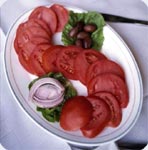 Raw salads consisting of tomatoes, cucumber, onion, cabbage, radish, capsicum etc. are high in fiber and when added to our lunch and
dinner can play a major role in reducing the glycemic response i.e. preventing the blood sugar from rising suddenly. Lemon juice, vinegar, salt, pepper and low fat curd may be used to season the salad but no oily dressings are permitted or our purpose will be defeated. A salad consisting of only carrots or beetroot must be avoided, as their calorie value is higher than of other vegetables. Raw salads consisting of tomatoes, cucumber, onion, cabbage, radish, capsicum etc. are high in fiber and when added to our lunch and
dinner can play a major role in reducing the glycemic response i.e. preventing the blood sugar from rising suddenly. Lemon juice, vinegar, salt, pepper and low fat curd may be used to season the salad but no oily dressings are permitted or our purpose will be defeated. A salad consisting of only carrots or beetroot must be avoided, as their calorie value is higher than of other vegetables.
Finally if you are an overweight or obese diabetic you can almost heal yourself if you lose weight. The connection between diabetes and weight reduction is as follows. Extra food eaten at any meal or snack produces raised glucose levels in the blood. This has to be removed and sent into the fat cells for storage. Till age 30, as more and more fat is removed from the blood new fat cells to store this are created. After age 30 no more cells are made but the existing ones keep expanding. After a while they say we can't expand any more. Then the extra glucose in the blood stays as it is instead of being removed as fat and blood sugar levels rise. The minute you reduce weight, fat is lost from the cells and there is vacancy in the cells so a message is sent to the blood and insulin to remove the blood glucose as fat and send it out to the cells. Therefore if you are over weight, weight reduction has to happen to lower blood sugar levels. | |