|
New mothers
 A lactating mother does need extra cals but I would say do not eat
large amounts of food but increase your milk intake in the form of milk or curd to 1 ltr of skimmed milk per day for the first 6
months. Special care should be taken to avoid fatty foods at this time as it will cause unnecessary weight gain and indigestion. Gas
producing foods like cabbage, cauliflower, cucumber and pulses (moong, channa) must be taken with caution to avoid gas formation in the mother and baby. Over 96% of women are biologically capable of breastfeeding and it can be a success quite naturally for most mothers. Breast milk is best for your baby as it has the perfect composition, dilution is clean and without contamination, Just be confident positive and look forward to it as a special experience of bonding with your baby that God has gifted to you. As you breastfeed, your caloric need increases quite a lot but please note that you do not have to increase your intake because there are already fat stores built up in your body during pregnancy and this will be utilised for the milk production. The more the baby drinks, more milk is produced. The best food for infants is breast milk. Ensuring that sufficient quantity of milk and good quality breast milk is produced, requires that first the mother-to-be must have a properly balanced and healthy diet throughout the pregnancy (i.e. plenty of milk, dhals, pulses, fruits and vegetables). During the months that one is breast feeding (nursing) special care must be taken to continue to consume these foods. Besides this drinking plenty of water and fluids is very important to ensure a good free flow of milk. A lactating mother does need extra cals but I would say do not eat
large amounts of food but increase your milk intake in the form of milk or curd to 1 ltr of skimmed milk per day for the first 6
months. Special care should be taken to avoid fatty foods at this time as it will cause unnecessary weight gain and indigestion. Gas
producing foods like cabbage, cauliflower, cucumber and pulses (moong, channa) must be taken with caution to avoid gas formation in the mother and baby. Over 96% of women are biologically capable of breastfeeding and it can be a success quite naturally for most mothers. Breast milk is best for your baby as it has the perfect composition, dilution is clean and without contamination, Just be confident positive and look forward to it as a special experience of bonding with your baby that God has gifted to you. As you breastfeed, your caloric need increases quite a lot but please note that you do not have to increase your intake because there are already fat stores built up in your body during pregnancy and this will be utilised for the milk production. The more the baby drinks, more milk is produced. The best food for infants is breast milk. Ensuring that sufficient quantity of milk and good quality breast milk is produced, requires that first the mother-to-be must have a properly balanced and healthy diet throughout the pregnancy (i.e. plenty of milk, dhals, pulses, fruits and vegetables). During the months that one is breast feeding (nursing) special care must be taken to continue to consume these foods. Besides this drinking plenty of water and fluids is very important to ensure a good free flow of milk.
Caution
Cream and ghee are the fat part of the milk and that is not necessary at all. Food should be cooked in oil and minimum oil. Rich fatty food, sweets and mutton are not the factors that will enhance milk production. If you eat too much fatty food you will not find time and space to fit in the fruits and vegetables. More B and C Vitamins from these are very important in the diet as they enter the milk and thereby go into the baby.
When you eat rich sweets and very fatty foods, it dehydrates the body and so please avoid these.
Consuming large amounts of ghee, mitai and heavy mutton preparations to ensure the production of milk is a misconception and one of the major reasons for obesity after the delivery.
Do's
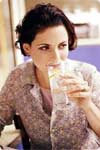 You need to drink at least 3-4 ltrs of water daily this will enhance a good flow of milk of the right dilution You need to drink at least 3-4 ltrs of water daily this will enhance a good flow of milk of the right dilution
Sample Diet
 I
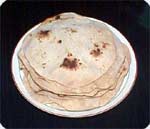
recommend lactating mothers to eat a well balanced diet with sufficient carbohydrate foods like bread, chapati, rice etc and protein, foods like milk, curds, dhal, pulses, egg, fish, chicken etc. The protein need at this time is higher and it could be met by increasing ones milk intake to 750 ml to 1 ltr/day i.e. 3-4 glasses (incl. Coffee, tea and curds etc.) Please note you need only more protein and not fat. Please remove as much cream and malai as possible from the milk by boiling for a longer time. Besides protein, there is also
a greater need for vitamins and minerals. So include plenty of fruits and vegetables. The next important factor is more fluid. Finally
the factor that most affects this is the amount and nature of the feeding that takes place. I would say that drinking milk/curd/buttermilk is a must during the nursing months. Daily the mother produces 600-800 ml of milk on an average. The protein, calcium and vitamins for this must be supplied from the mothers diet and body. I would therefore recommend the consumption of 3-4 glasses of skimmed or low fat milk daily and 10-12 glasses of water at least. Besides this, try to ensure that you take 2 fruits, 1-2 c of cooked vegetables, 1 c of dhal and the required bread, rice and chapati daily. An egg and1-2 pcs.of chicken or fish may also be eaten per day. I
recommend lactating mothers to eat a well balanced diet with sufficient carbohydrate foods like bread, chapati, rice etc and protein, foods like milk, curds, dhal, pulses, egg, fish, chicken etc. The protein need at this time is higher and it could be met by increasing ones milk intake to 750 ml to 1 ltr/day i.e. 3-4 glasses (incl. Coffee, tea and curds etc.) Please note you need only more protein and not fat. Please remove as much cream and malai as possible from the milk by boiling for a longer time. Besides protein, there is also
a greater need for vitamins and minerals. So include plenty of fruits and vegetables. The next important factor is more fluid. Finally
the factor that most affects this is the amount and nature of the feeding that takes place. I would say that drinking milk/curd/buttermilk is a must during the nursing months. Daily the mother produces 600-800 ml of milk on an average. The protein, calcium and vitamins for this must be supplied from the mothers diet and body. I would therefore recommend the consumption of 3-4 glasses of skimmed or low fat milk daily and 10-12 glasses of water at least. Besides this, try to ensure that you take 2 fruits, 1-2 c of cooked vegetables, 1 c of dhal and the required bread, rice and chapati daily. An egg and1-2 pcs.of chicken or fish may also be eaten per day.
Even women from the weaker sections and undernourished produce plenty of milk without eating the above fatty foods. Putting the baby to the breast at regular intervals (once in 2-3 hrs) and allowing her to suck at
the breast is what stimulates the free flow of milk. I repeat drinking plenty of water is a must at this time. If you are overweight after your delivery you must be careful with your diet from the beginning. You must eat properly balanced meals as mentioned above and completely avoid fatty foods. Regular walking for 20-30 min a day may be started after 6-8 weeks after the delivery.
The Art of Breast Feeding
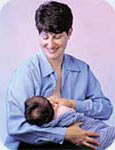 Put the baby to the right breast allow her to drink for five minutes burp her. Then put her to your left breast and allow her to drink for as long she wants (10-15 mins). Try not to feed again for at least 2 hrs. This time limit is essential for milk production. When it is time for the next feed, start at the left breast for 5 mins burp and then place at right breast for the longer duration. One more important factor ensure that the baby's mouth is properly placed on the breast around the nipple otherwise the nipples will crack and the breast-feeding will be very painful and difficult. Put the baby to the right breast allow her to drink for five minutes burp her. Then put her to your left breast and allow her to drink for as long she wants (10-15 mins). Try not to feed again for at least 2 hrs. This time limit is essential for milk production. When it is time for the next feed, start at the left breast for 5 mins burp and then place at right breast for the longer duration. One more important factor ensure that the baby's mouth is properly placed on the breast around the nipple otherwise the nipples will crack and the breast-feeding will be very painful and difficult. | |